The short version
- Yes, it is worth riding. The video that called it “aggressive tourism” is also not wrong about what it filmed.
- The crowd you see is a concentration problem, not a boom. Ha Giang’s visits grew 0.86% in the first half of 2025, and fewer than one visitor in five was foreign.
- Everyone leaves town inside the same short window, rides the same direction, and stops at the same three places. That is what makes the queue.
- The income is real and it reaches real people. It does not cancel out the noise, and I am not going to pretend it does.
- What you actually decide is not come or don’t come. It is how.
I run one of the companies in that queue. So read this knowing exactly who is talking: I am the Director of Jasmine Tours, a tour operator in Ha Giang, and this site is ours.
A traveller filmed a stopped column of motorbikes on a wet road here and captioned it “POV: You realize the Ha Giang loop is actually just aggressive tourism…” Thousands of people argued underneath it. I answered in the comments myself, and then I kept thinking about the ones who disagreed with me.
This is the longer answer.
What were people actually arguing about?
The traveller who posted it was careful, and that got lost fast. Her own note under the clip said experiences vary, and that she was not claiming hers was everyone’s. What she actually wanted to talk about was how quickly tourism changes a place like this, and what a visitor owes it.
Underneath, three arguments formed. All three deserve to be taken seriously.
The crowd is real. Riders who had just finished described exactly what the video showed. One who rode it three years ago said it must be worse now. Another made the sharpest point in the thread: a few people take the money, and everyone else in the village absorbs the engines.
The money is real too. Several riders had tipped their driver and then found out what the tip paid for. One said it was putting a five-year-old into school. Their argument was blunt: staying away does not send anyone here a cheque.
It depends how you ride it. The most useful camp. Riders described going anticlockwise to miss the traffic, joining groups of six instead of sixteen, sleeping in village homestays (a room in a family’s own house), eating at roadside places, and skipping the drinking entirely. Several said the same thing in different words: most travellers do not know the quiet version exists.
That third group is right, and this article is mostly about them.
The number the argument keeps missing
Everyone in that thread assumed a boom. The province’s own figures do not show one.
Ha Giang took about 3.2 million visits in 2024, with international visitors arriving from 186 countries. The UK, France, Germany and the USA were the main markets (Tiền Phong, 16 January 2025, read 2 September 2026, quoting provincial vice-chair Vương Ngọc Hà).
Then the half-year number. In the first six months of 2025 the province reported over 1.7 million visits, of which nearly 300,000 were international, and that total was up 0.86% on the same period a year earlier (Báo Tuyên Quang, reported 20 June 2025 before the half-year closed, read 2 September 2026).
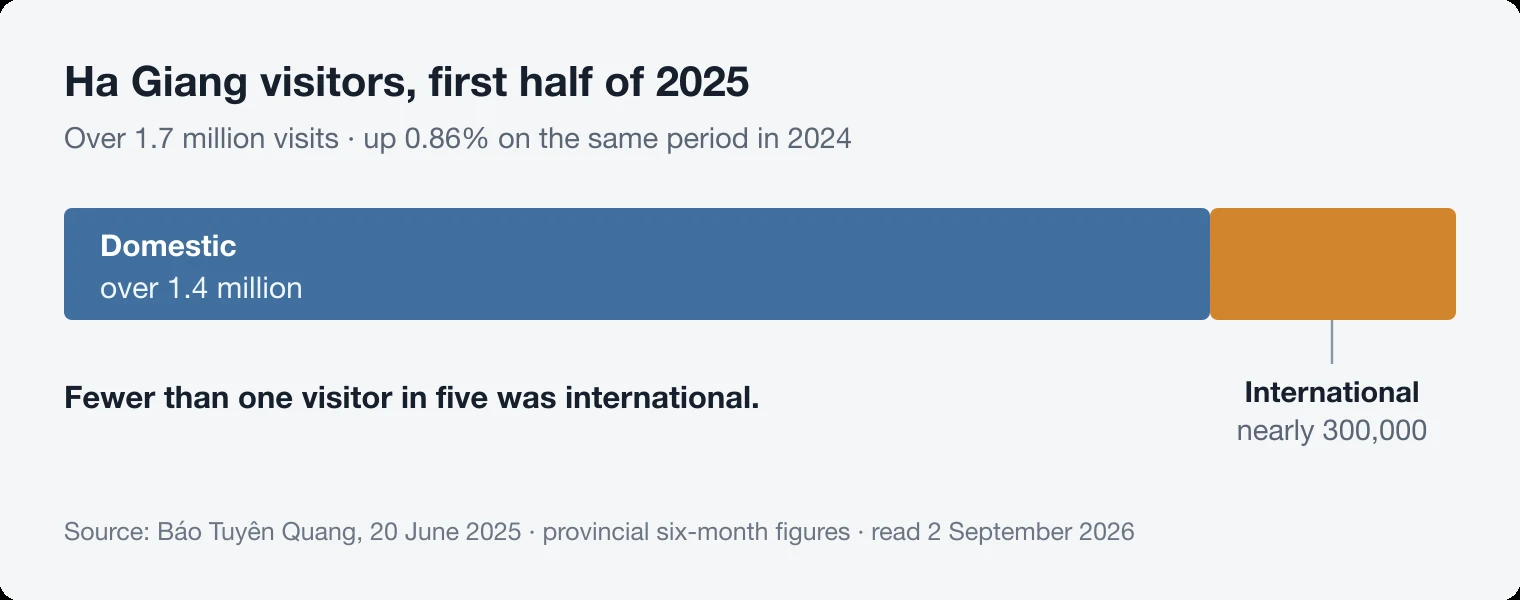
Two things follow.
Foreign riders are a minority of the people here. Fewer than one in five. The buses at Lũng Cú and the crowds at the flag tower are mostly Vietnamese families, and they were coming here before the loop had an English name.
Growth was under one percent. Not nothing. Not a surge either.
I have to be straight about what that figure is and is not. It is province-wide, not loop-specific. The road between Ha Giang town and Mèo Vạc could be growing much faster than the province around it, and nobody publishes a number for that road alone. So treat it as a floor under the argument rather than a rebuttal of it. Whatever you saw in that video, it is not being driven by a province-wide explosion.
It is being driven by everyone doing the same thing at the same time.
What actually makes that queue?
This part is not opinion. It is how the day is built, and it can be changed.
Three things bunch the day, and a rider controls all three.
| What bunches the day | Why it happens | What you control |
|---|---|---|
| Everyone leaves inside the same window | Groups roll out of Ha Giang town within roughly the same hour and a half, because that is what makes the day’s distance work | Ask for a later start. An hour off the peak changes the whole first day |
| Everyone rides the same direction | The standard route runs one way around, and there is a real reason for it | You can ride it the other way. Read the trade-off below before you decide |
| Everyone stops in the same three places | Mã Pí Lèng, the Nho Quế boat, the same lunch village, all genuinely worth it | Nothing, and you should not want to. Shift your timing instead of skipping the stop |
Twenty groups of ten, leaving within twenty minutes of each other, look exactly like one group of two hundred to anyone standing at the roadside. That is why the road empties between the stops and jams at them.
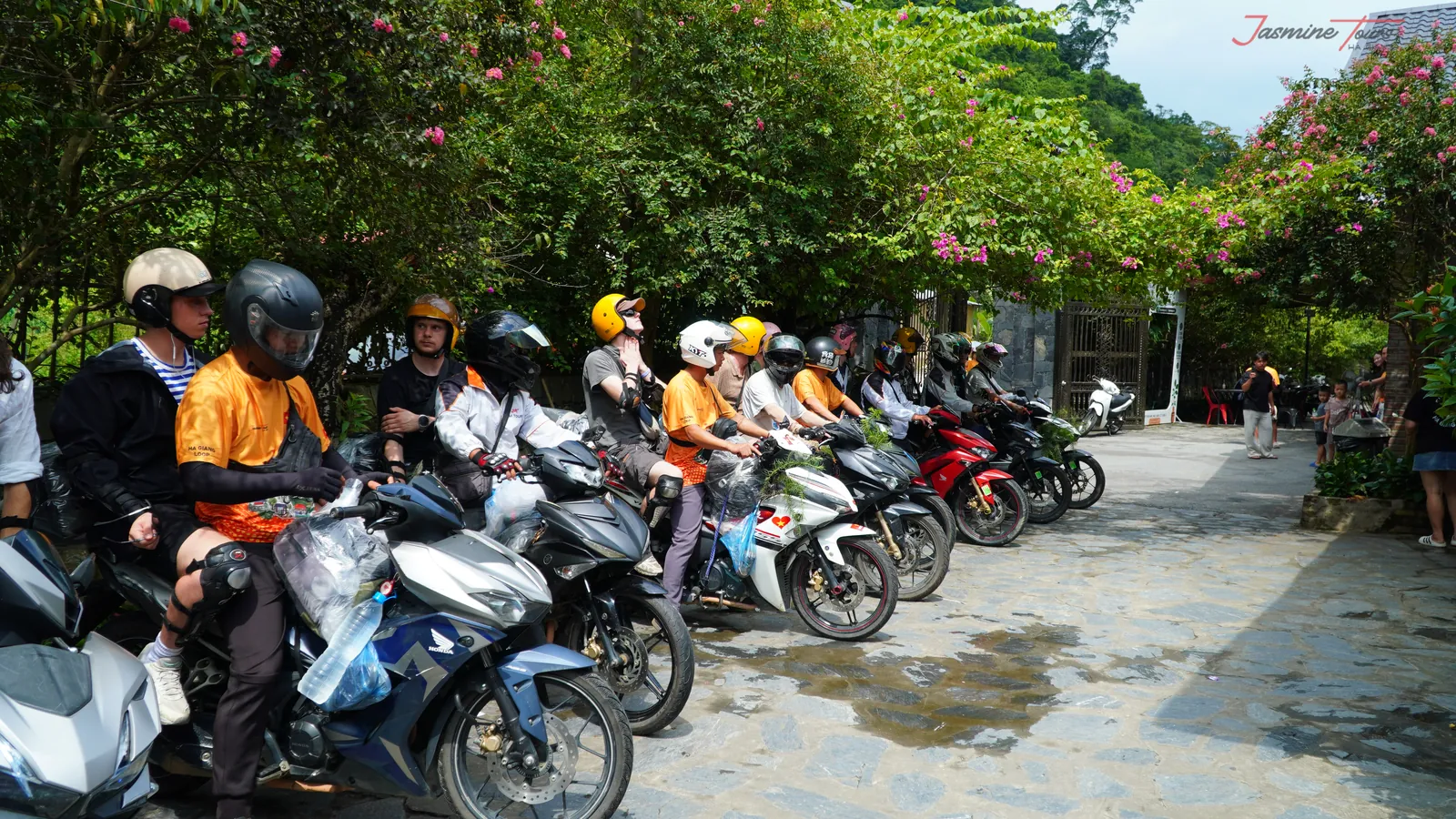
Nobody rides in a group of two hundred. We cap a group at 10 guests, with a leader and a second rider supporting, and that is normal practice rather than generosity: you cannot head-count more than that on switchbacks. That’s our own tour — Jasmine Tours is the company behind this site.
The scene in the video is what happens when twenty of those groups reach one viewpoint together. A large part of what looks like a moral problem is a scheduling problem.
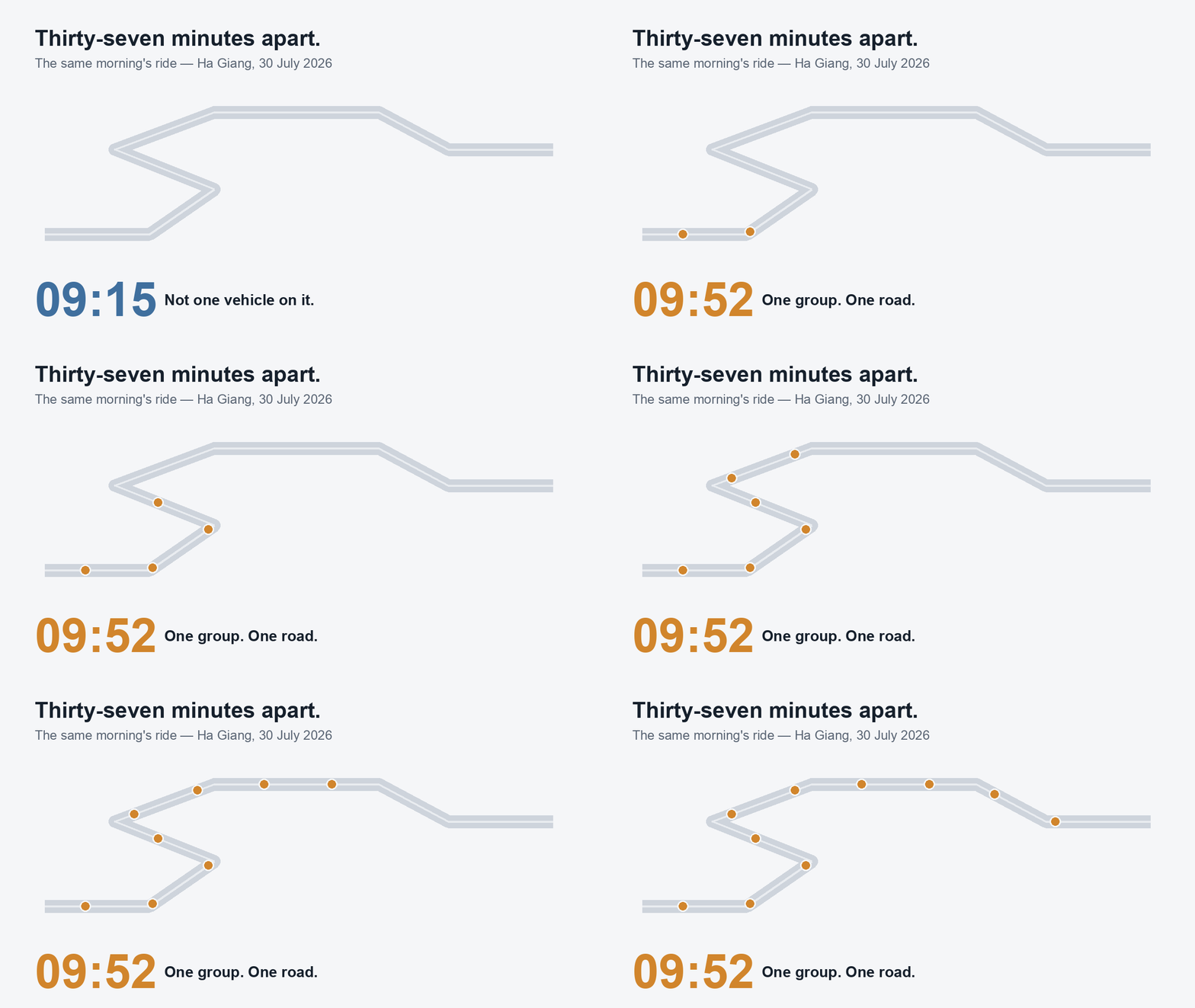
Here is the evidence for that, and it is not flattering to us. Both frames below were taken on the morning of 30 July 2026, on the same ride, thirty-seven minutes apart. They are two different bends, and I am telling you that rather than letting you assume otherwise. The point is the clock, not the corner.
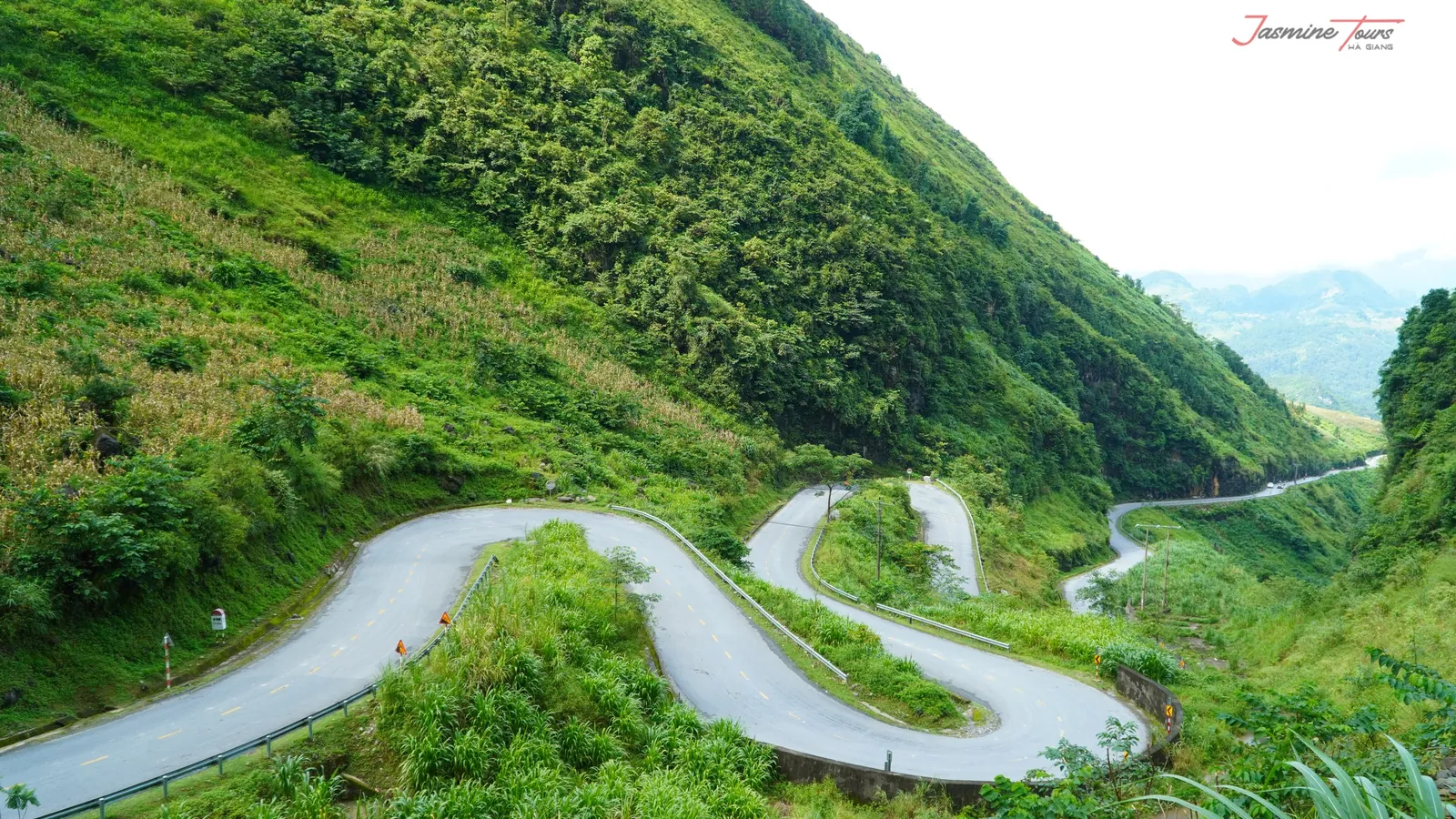
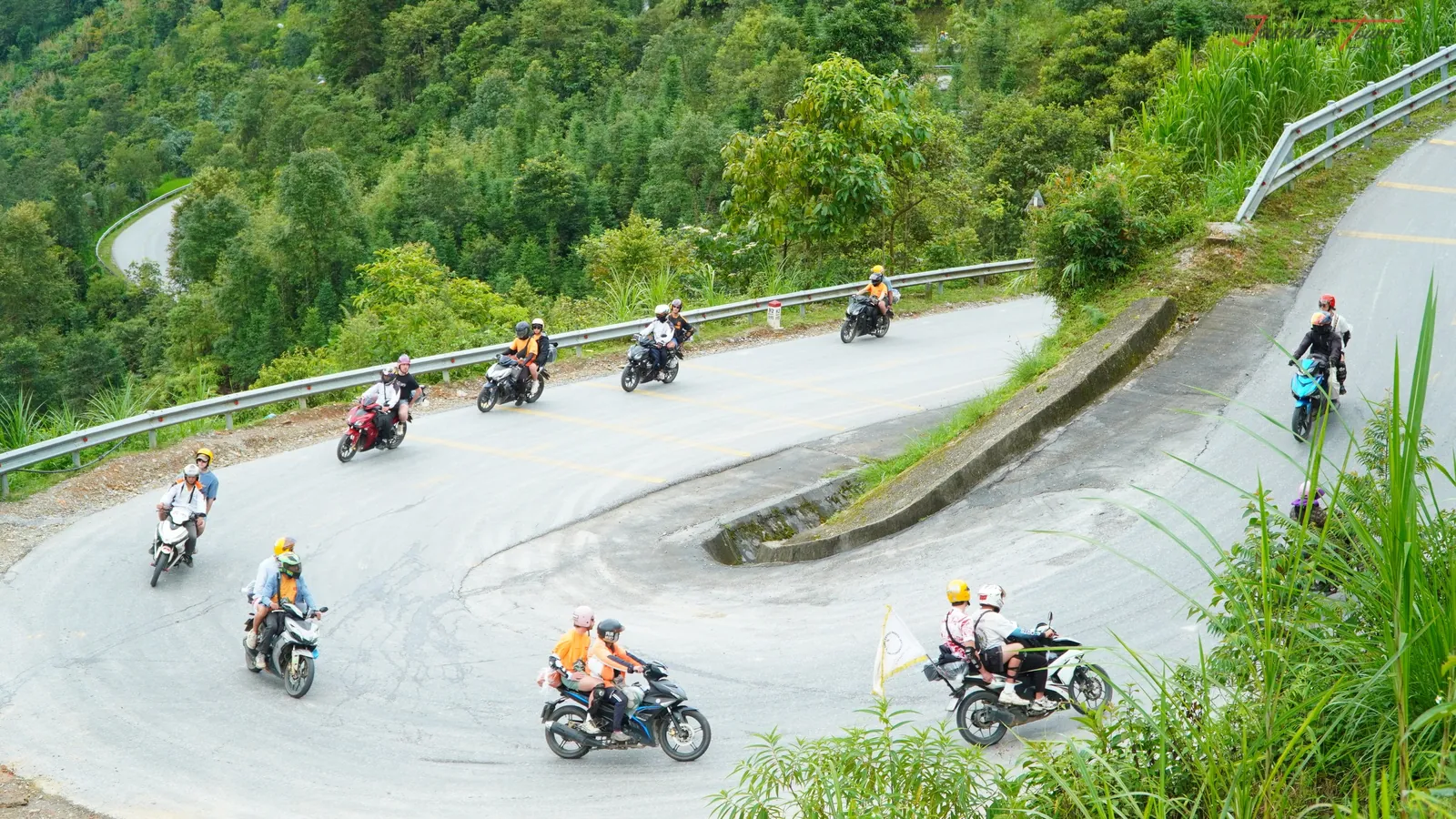
Now look at that second frame properly, because it is not what it appears to be. That is not one group. Go by the jerseys and the helmet colours and you can pick out riders from at least three different companies threaded into each other — mine among them. Nobody planned a column that long. It assembled itself, out of separate tours that all left town inside the same hour.
That is the whole argument in one photograph. Twenty groups of ten do not look like twenty groups of ten from the side of the road. They look like one enormous convoy that somebody organised, and no one did.
I am not going to use that as an excuse. Ours are in there, and from the verge it does not look restrained; pretending otherwise would be the dishonest move here. But the fix follows from the cause: if the column is an accident of timing, it comes apart when the timing changes. Thirty-seven minutes earlier, on the same road on the same morning, we were riding through the frame above it.
Which direction we ride, and why it is not about the crowd.
Our own groups ride it the standard way: Ha Giang, then Yên Minh, then Lũng Cú, Đồng Văn, Mèo Vạc, and out to Du Già. That is not a scenery decision. It is a difficulty ramp.
Day one to Yên Minh is about 95 km, and it is the easy one. Long enough to feel like a real day, short enough to survive the first-morning nerves. Day two runs Yên Minh to Lũng Cú, Đồng Văn and Mèo Vạc, about 110 km, with more stops and harder riding, and it lands after everyone already has a day in their legs.
Then it splits. On the three-day version you go straight back to Ha Giang, about 150 km, and it is the hardest day of the trip. That is deliberate: it is the version for people who are not carrying on, and the day is a big enough barrier to be honest about it. On the four-day version, day three is short instead: the Nho Quế boat, about 20 km there and back, then on to Du Già, roughly 90 km all in, with the longest rest of the trip and the quietest stop on it. Day four comes home from Du Già, about 100 km of easy road with few stops. Four days is the version I would put almost anyone on.
I split the route into two, three and four-day versions in the first place because riders kept running out of daylight before Đồng Văn. So did other people; the difference is that we pushed ours until it wore into the shape most people ride now.
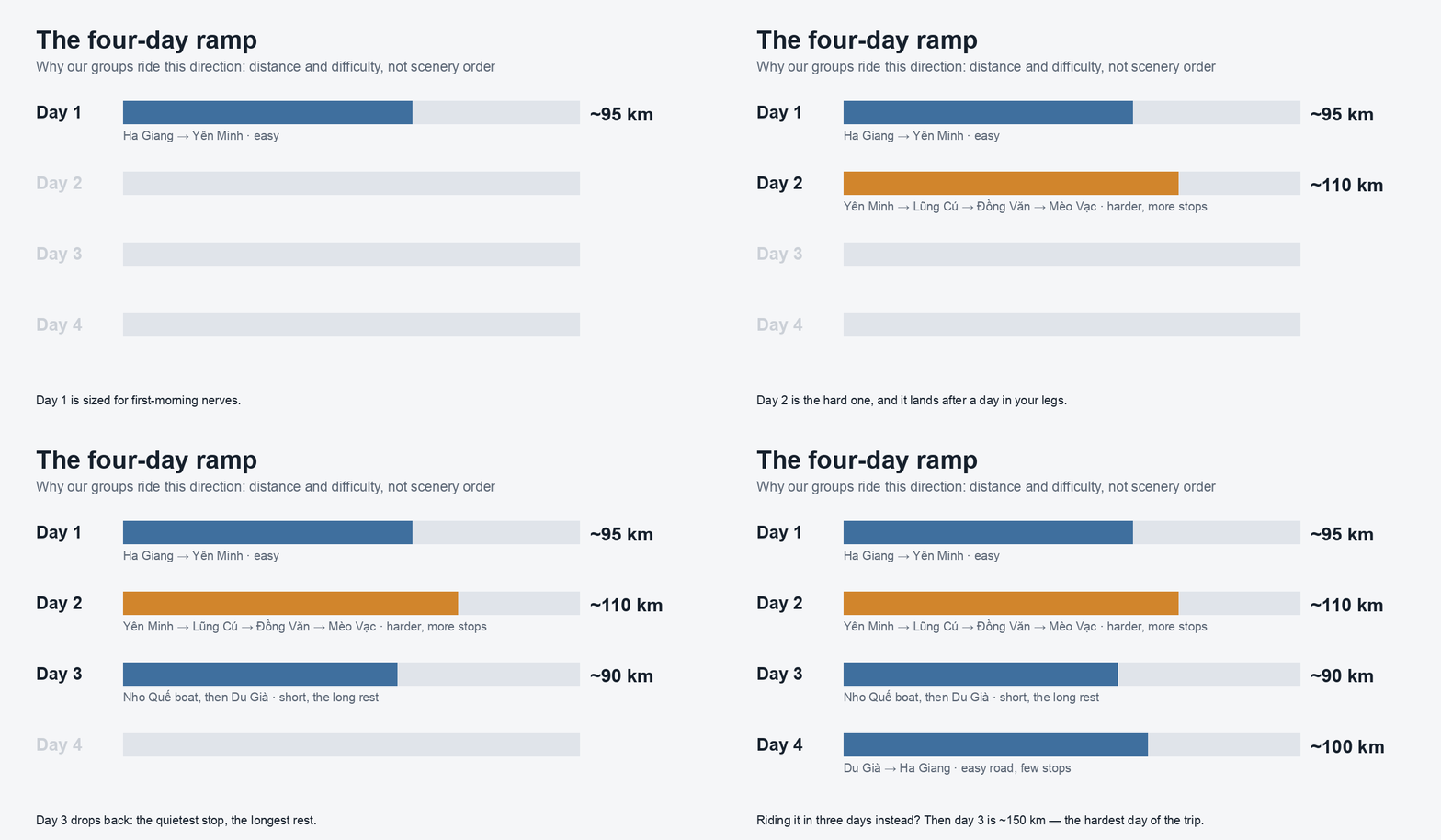
So when I tell you that reversing the direction thins the traffic, understand what it costs you. Ride it the other way and you meet the same bikes once, going past, instead of sitting behind them all morning. You also take the 150 km day first, before you have ridden anything here at all. If you have ridden mountain roads before, that is a trade worth making. If this is your first week on a manual bike, it is not, and I would rather you sat in the traffic.
Where does the money actually go?
Here is what I said there, in substance. Nine years of running this road, and of sitting with the people who drive it, is where it comes from, and I still mean every line of it.
Tourism built jobs and an income here that the parents and grandparents of many of our drivers could not have imagined. You cannot take a European standard of living and measure a life in these mountains against it. And when you watch us working, you are seeing half of it. We are also enjoying the three days with you, while earning a living from them.
The alternative is not some untouched version of this place. The alternative is farm labour on a steep hillside, or leaving for months to work over the border, or a factory in a province nobody in the family has seen.
The clearest example I have is one of our own drivers, and you do not have to take my word for any of it, because a national newspaper went and reported it.
Giàng Mí Giáo is 27, H’Mông, from Quản Bạ, and he is one of our drivers. That is my statement, not the paper’s. What VnExpress reported in November 2025 is this: as a group leader he earns 12–13 million₫ a month plus tips. Before this he was a mine worker in Quảng Ninh on 9 million₫ for twelve-hour days. He has since brought 20 to 30 people out of his own village and commune into easy riding, which is the job of the local driver who carries a guest on the back of the bike. Then he told the paper what those three days used to feel like from his seat. “Ba ngày chở khách ngồi sau, tôi gần như im thít suốt chuyến đi, chỉ biết cười như người ta dạy thôi.” Three days carrying a guest behind him, saying almost nothing the whole trip, just smiling the way he had been taught (VnExpress, 14 November 2025).
That is the line I keep coming back to. He is on our team, and on his early trips he could not talk to the people he was carrying. He can now, and he leads a group. That gap is what the job actually closed, and no statistic in this article says it as well as he does.
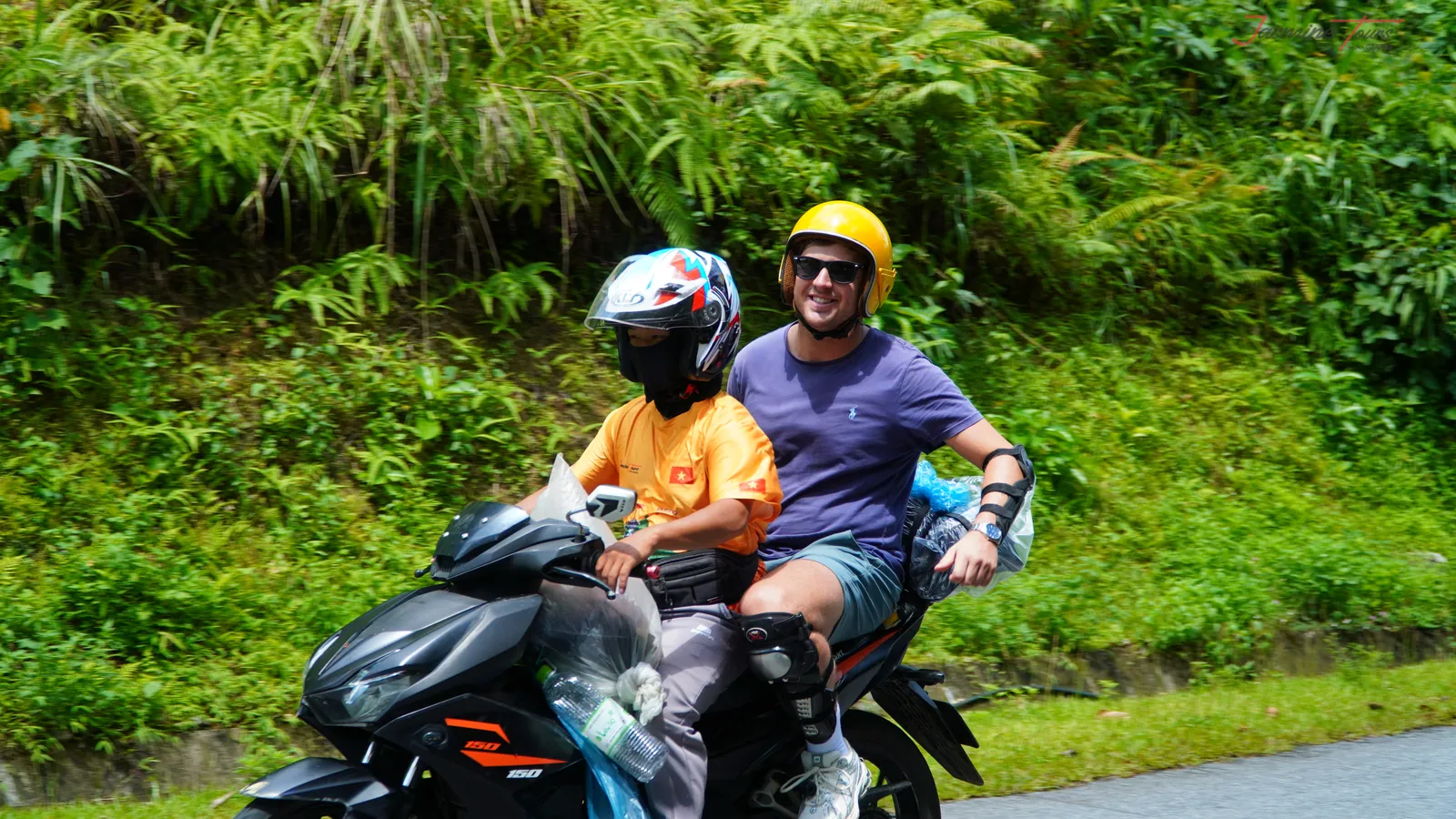
He is not an exception we wheeled out for the press. More than 70% of our people are ethnic-minority staff who have stayed with us long-term, many since 2018 (Tiếp Thị Gia Đình, 6 October 2025).
Now the part I am not going to dodge.
None of that answers the commenter who said a few people take the money while the rest of the village takes the noise. That person is describing something true. A homestay owner, a driver and a boat operator all earn from a group passing through. The family two houses along the road earns nothing from it and hears every bike. Money reaching some local people is not the same as money reaching this village, and I would rather write that sentence myself than have it written about me.
Where does the criticism land on us?
Three things, plainly.
We grew faster than Ha Giang’s transport could carry. Through 2023 and 2024, on a handful of peak days, guests who had paid for a VIP bus were put on an ordinary one. We apologised and we refunded them. Two things fixed it: many more coach operators now run these routes, and traffic police enforce passenger numbers hard enough that a photograph is sufficient to fine an operator. It should not have taken either of those.
We are not the cheapest, and that is a decision. We withhold income tax across the payroll, and we pay BHXH, Vietnam’s state social-insurance scheme, for our salaried staff. When a price on this road drops well below ours, something came off the road rather than off someone’s margin: usually the meals, sometimes the second rider who backs up the group, occasionally the driver’s experience. If your budget is the deciding factor, ride it yourself. Self-drive is the honest cheaper option, not a lesser one, and it is on the same price list as everything else we run.
Our guest mix is narrow. Most of the people we host are British and Australian. German, French, American and Singaporean guests are still a small share, and the character of a group follows from that whether we plan it or not.
Two smaller things we do control. Music goes off at 22:00 at our stops, out of respect for the village the homestay sits in, because a homestay is a family’s house and not a venue. And our drivers do not drink at all: any driver who sits up with guests finishes by 22:00, and every driver is breath-tested each morning before the group sets off. Nobody rides until the test is clear.
Guests are a different matter, and people ask us about this more than almost anything else. Guests may drink if they want to. It is part of the evening for some people and not for others, nobody is pushed either way, and a guest who wants an early night takes one. The music stopping at 22:00 is not a rule aimed at you. It is aimed at the family whose house you are sleeping in.
We also hand every guest a tree seedling. The programme has run since April 2026, at Há Chớ in Lũng Phìn and Bản Phố in Minh Tân, and by July more than 5,000 trees had gone into the ground over the previous two months (VnExpress, 10 July 2026). I want to be careful about what that is. It is a good thing on a bare hillside. It does not offset a motorbike, and I am not offering it as a receipt.
Six things you can do instead of staying away
Every one of these is checkable before you book, and none of them costs more.
- Ask which direction the group rides, and decide whether you want the other one. Ours ride the standard way, for the ramp reason above. Reversing thins the traffic and hands you the hardest day first.
- Ask what time your group leaves, and how many bikes are in it. A start an hour off the peak changes your whole first day. Ten is a group. Thirty is a convoy.
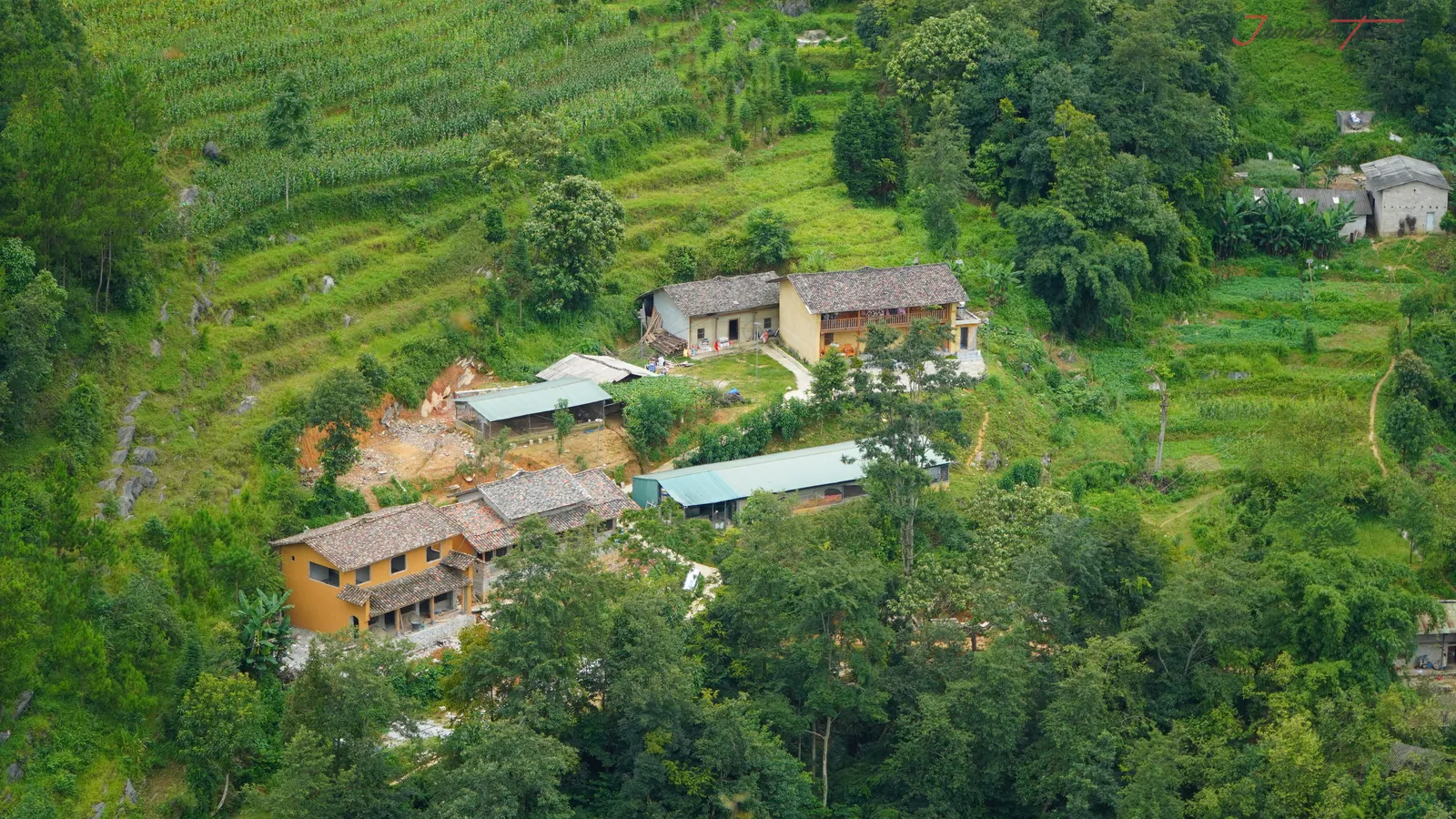
- Sleep in villages, not only in the towns. The night is where a place either gets something from you or just gets woken up.
- Spend outside the package. Buy lunch at a roadside place, coffee at the pass, fruit at the market. The money that leaves the itinerary is the money that spreads.
- Music off at 22:00 wherever you are. You will be gone in the morning. They will not.
- Ask the questions that only a real answer fits. When was this bike last serviced? What is the maximum group size? Are drivers breath-tested? Where does my tip actually go? An operator running it properly answers all four in a sentence each. Vagueness is the answer.
None of that requires you to name and shame anyone. Run the tests yourself and you will know within one exchange of messages.
You will have noticed those are also our own answers, and that is not an accident, so make me prove them. A group with us is ten guests, a leader and a second rider. Every driver is breath-tested each morning before the group moves. Our own team services every bike the moment it comes back from a trip, rather than on a fixed interval. On the fourth question, where your tip goes, I am not going to hand you a policy line inside an article. Ask it directly, of us and of everyone else you shortlist, and judge the answer you get.
So, is the Ha Giang Loop worth it?
Yes. I sell it, so weigh that accordingly, and note that the riders in that thread who had booked nothing from anyone said the same.
But “worth it” was never the real question in that comment thread. Nobody was deciding whether the road is beautiful. They were deciding whether their presence on it is a good thing, and that is a question about how, not whether.
Less tourism here is not a plan. It is a wish with somebody else’s income attached to it, and the person whose income it is did not get a vote in the comments. Better-distributed tourism is a plan. Quieter tourism is a plan. Riding at a different hour, in a smaller group, in the other direction, spending outside your package: those are plans, and each one is a decision you personally make.
So the sorting question is this. Are you choosing between coming and not coming, or between two different ways of coming?
If it is the first, come. If it is the second, you already understand the article.
Frequently asked questions
Is the Ha Giang Loop overcrowded?
At specific times and places, yes. The road is busy in the mornings when groups leave Ha Giang town together, and the main viewpoints crowd when several groups arrive at once. Between those points it is often empty. Visits across the whole province were reported up 0.86% in the first half of 2025 (Báo Tuyên Quang, 20 June 2025), a province-wide figure and not a count for the loop road alone, so what riders experience as crowding is concentration in time and place rather than a surge in numbers.
Is it ethical to ride the Ha Giang Loop?
Riding it is not the problem. Riding it the same way as everyone else is. Tourism here supports drivers, guides, homestays and boat operators, and a national newspaper has documented individual drivers moving from mine and factory work into guiding (VnExpress, 14 November 2025). It also concentrates noise and traffic on villages that earn nothing from it. The useful response is to change how you ride, in direction, timing, group size and where you spend, rather than to stay away.
Does the money actually reach local people?
Some of it, and unevenly. Drivers, homestay families, boat operators and roadside kitchens earn directly. Families living on the road who sell nothing to travellers do not. At our own company, more than 70% of our people are ethnic-minority staff who have stayed long-term, many since 2018 (Tiếp Thị Gia Đình, 6 October 2025). The share that reaches a village goes up when you spend outside your booked package.
Can I ride the Ha Giang Loop without joining a big group?
Yes. Self-drive is legal and common if you hold the right licence, which for most visitors means sorting the permit paperwork before you arrive, and small private groups are widely available. Many riders in that comment thread had done exactly this, with six people, local homestays and no party, and said they met almost nobody at the viewpoints. Read what an easy rider actually is and the route map before you decide which version suits you.
Keep reading: the Ha Giang Loop route map and day splits · what the loop actually costs · when to come, month by month · easy rider or self-drive
Ha Giang Local is written and run by the team at Jasmine Tours, a licensed tour operator based in Ha Giang.